Sunday, 2 November 2014

Origin of the Bengali script

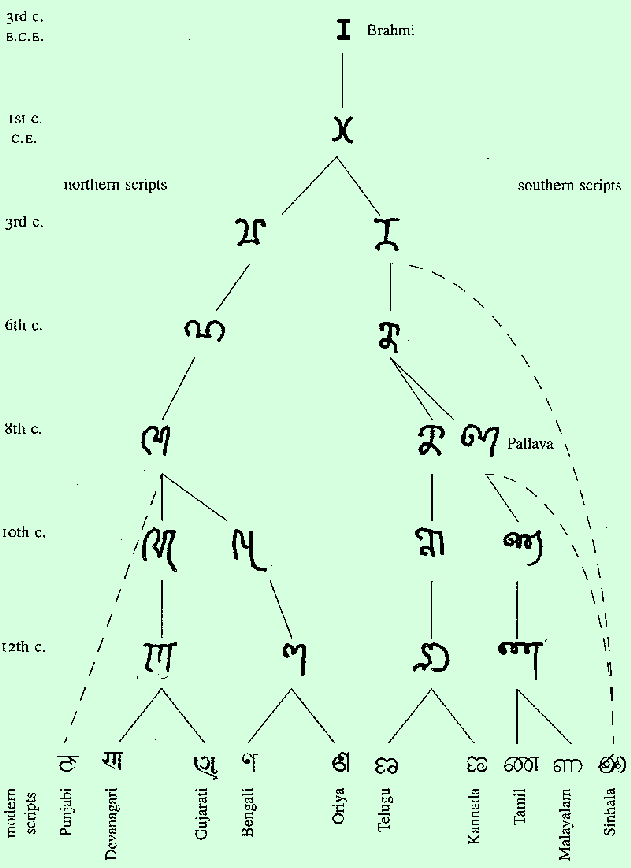
Writing systems vary widely (see the page on ancient scripts), and probably arose a number of times separately. All the modern Indian, and many of the south east asian, scripts ultimately derive from a script called brAhmI. This and kharoSThI were used in India in the earliest monumental writings during the Maurya period (3rd-2nd cent BC), and may have originated as early as the 7th and 5th centuries respectively (see here for a map of their subsequent spread). The earlier, yet undeciphered, but probably syllabic, Indus valley script, a script which may have been of indigenous origin, had long gone out of use. In contrast, brAhmI and kharoSThI were syllabic alphabetic systems (otherwise called abigudas), not surprising given the detailed syllabic and phonemic analysis prevalent in Indian grammatical systems prior to this date. With the syllables analyzable into consituent consonantal ligatures and vowel modifiers, this was the most systematic syllabic consonantal system to that date. A writing system, hangul, which was more systematic (in marking the phonemic contrasts) was to arise in the world only two millenia later, probably again ideologically influenced by alphabetic descendants of brAhmI.

The idea of alphabetic writing in India, at least as far as it applied to kharoSThI, probably arose from the consonantal Aramaic script (a system suited for semitic, but not Indo-european languages where vowels formed parts of the word roots rather than merely being grammatical markers), an important trade language of the middle east in the first half of the first millenium BC. This in turn was a descendant, through Phoenician (end second millenium BC), of the primal consonantal script, Proto-Canaanite (Proto-Sinaitic; middle of the second millenium BC), which itself arose out of the highly logographic Egyptian hieroglyphics by the acrophonic principle. Though it is attested in the middle east only after 1800 BC, alphabetic writing may have developed in Egypt around 2000 BC, as exemplified by a possibly early Middle Kingdom inscription by a possibly asiatic employee at Wadi el-Hol. The Egyptian hieroglyphic system may have had an independent origin than the almost contemporary sumerian script.
Brahmi, originally written from right to left like its predecessor and like kharoSThI, later changed direction; and changed over time and space. By the third century BC, it had already developed some number symbols, and it is not clear whether these symbols were descendants of the aramaic system (an additive system with symbols for 1 and 4). The evolution seems to have been slight before the guptas, and in North India, therefore, we can say it changed through early and late maurya and shuGga periods, to give rise to the monumental gupta script (which was very close to the brAhmI script) around the 4th-6th century AD. About this time, the eastern Gupta character gave rise to the western siddhamAtRkA branch which gave rise to the nAgarI script which was close to its final form by the ninth century, by which time (594 AD legal document; later attestations from about 150 years later; first undisputed evidence from 876 AD) the place value system is attested (this development was, probably unrelated to the 1700 BC Babylonian base-60 place value system, though the rare use in greek documents may have influenced Indian development; it is certainly unrelated to the 7th century Mayan base 20 place value development; and there is some evidence that its early development dates to early centuries AD).
On the other hand from the eastern variant of this same eastern Gupta character, proto Bengali had developed by the 11th century which gave rise to the recognizably Bengali script in the medieval period. The major period of change can be traced to the 7th to the 9th centuries. The western script seems to have influenced it around the 10th century, but this influence seems to go away during the reign of mahIpAla, and at least some of the letters (a, u, k, kh, g, j, dh, n, m, l, and kS) are recognizably bengali. Many more letters (about 22 of them) became distinct by the time of vijaYasena, and the process was almost complete within the next couple of centuries. The final form used today is the result of standardization due to the first printing types in 1778, with archaisms rapidly disappearing over the next century.
Early examples of writing in Bengal include third century BC prAkRta inscription in brAhmI script at mahAsthAnagaDh.a, a second century BC example from shiluYA in noYAkhAli, and the example from shushunia. Note that the use of the nAgarI script for writing saMskRta has no early example: it is a truly modern tradition.
Up to history of Bengal

BENGALI SURNAMES and TITLES with ORIGINS

BENGALI SURNAMES and TITLES with ORIGINS


The surnames or titles have originated from clan names, village or place names, group names, occupation etc. It is from folk to modernity. The examples are following.

Original- to- Sanskritized -to-  English (anglicized)

Barujjye (original)  -- to -- Banerjee (anglicized)
Bandoghati (original)  to Bandopadhay (sanskritized) to Banerjee
Mukhoti (original) to Mukhopadhay (sanskritized) to Mukherjee (anglicized)
Gangal (original) to Gangopadhay (sanskritized)  to Ganguly (anglicized)
Chatto/ Chattoraj/ Chattokhandi (original) to Chattopadhay (sanskritized) to Chatterjee (anglicized)
Bhatto/ Bhat (original) to Bhattacharya (sanskritized) 

Explanation-1. Shandilya clan (gotra) had three varieties- Barujjye, Batabyal and Bandoghati. Banerjee (anglicized) has distinctly come from Barujjye (like Banaras came from the Baranasi). Bandoghati (original) became Bandopadhyay (sanskritized). Later they also started using Banerjee in English. However Batabyal remained and continued the same.
2. Gangal (original) became Gangopadhyay (sanskritized) then Ganguly (anglicized). Some say why Gangopadhyay is not Gangerjee like Benerjee or Mukherjee. It is because symmetry was drawn from Gangal (original).

Title/ Occupation
Goshthipoti (sanskrit) Goshthipal/ Goshthopal (apabhramsa) Ghoshal (bengali)
Goshtho (sanskrit) Ghosh (bengali). They are milkmen. The cows graze in group. Goru ra goshthi badwa bhabe ghore. Tar theke goru ke bole goshtho ba go. Ta theke goshtho ba ghosh padobir utpotti.
There are 4 kinds of Goyala or milkmen caste, as Ghosh, Gop, Sadgop and Yadav. There may be several castes in the same occupation. Example is Tili and Teli. They are different caste but in same occupation.

The surname Mondol has come from Morol or village headman. Mondal is not alawys lower caste.

2. Dom caste is not Deadbody Carrier. 
The Dom caste is wrongly identified as Deadbody Carrier in WB. Dom caste is originaly bamboo worker. They make dol/ dali/ dhama/ dhol/ etc from bamboo. The term, Dom has come from dol or dhol or dhama. But they are wrongly identified as Deadbody Carrier. It is due to ocupational mobility downwards. Still the people carrying deadbody in the Hospitals and Police Stations should not be called Dom. Let us call them Shob Bahok (in Bengali) or Deadbody Carrier and not the Dom. In the same way the word Prostitute is now substituted by Sex Worker.
                                                                                                             
3. The origin of Rarhi Brahman-
Some mistakenly think that the term Rarhi is derived from Rarh region of western Bengal. But that Rarh is derived from Ruksha (dry). It is a modern geographic term while Rarhi is a traditional term.
The term Rarhi (shreni) is derived from Gaudiya (shreni). Gaud (Malda) was a place of Sanskrit studies later shifting to Nabadwip. Hussain Shah was also a patron of Gaudiya pundits and invited Rup, Sanatan and Srijiv Goswami in his royal court.

The Gaudiya pundits established a distinct philosophy and rituals in Bengal. Many followed the path of Gaudiya pundits and came to be known as the Gaudiya shreni Brahmans and later Rarhi Brahmans (Gaudiya = Rarhi) by alternative accent.  The sect established by Sri Chaitanya Dev is called the Gaudiya Vaishnavism and he is often called the Gaud. Some denied the newly originated path of the Gaudiya pundits and claimed to be follower of original Varanasi pundits later known as Vaidik shreni. Later the term Rarhi became popular to distinguish from the Barendra Brahmans. It is to note that Barendras are homogenous but Rarhis are heterogenous. The Rarhi Brahmans (not all) are presumed to have migrated and come from north India. It is from the Ananda Bazar matrimonial advertisement that the term Rarhi became popular forgetting its origin from Gaudiya. Rarhi—Gaurhiya   Gaurh-- Rarh

4. The origin of Barendra Brahman-
 Barendras are known as the Brahmans of the Five (later Seven) ancient villages (5 Gramer Bamun) of Bengal. First they developed and spread in Five (5) ancient villages (Adi Janapad) of Bengal along lower Ganges and later on extended to 7 villages. The term Barendra has come from the king (landlord) Birendra of Pabna. Some say that Birendra was one of the 12 great landlords of Bengal (Baro Bhuniya). Birendra hailed in the Pabna district of North Bengal. He was patron of his own community and encouraged their migration from the Five ancient villages (lower Ganges) to his territory (Pabna). The migrants continued their village names to distinguish among themselves. The village names later became their surnames. The Barendras use Five (5) different surnames associated with original villages. These are.
1. Bagchi from Bagcha village presently located near Barrackpur of 24 Parganas
2. Bhaduri from Bhadur village presently located near Bangaon of 24 Parganas
3. Lahiri from Lohori village presently located near Jessore district of Bangladesh
4. Moitra from Mohit village - mohitra –then- moitra – presently unknown
5. Sanyal from Sen Lal village – senlal – then-sanyal

The 5 ancient (later 7) villages can still be traced along lower Ganges in Hoogly and 24 Parganas districts. One is Adi Saptagram on Ganga in Hoogly district. Bhadur village is presently located near Bangaon of 24 Parganas. Bagcha village is presently located near Barrackpur of 24 Parganas. Barendras are indigenous Brahmans of Bengal while the Rarhis have come from outside, north India. Both are different in physical structure.
(Senlal was a landlord. The village was named or called after him. This tradition is found in many other cases. Bogura, a district of Bangladesh is from Bogra Saheb, commander of Hussain Shah and also Mymen Singh, a commander under Ruknuddin Shah)

5. KAYASTHO COMPLEX in WB- It is viewed that caste consciousness is growing. In the Ananda Bazar Patrika, (WB) matrimonial column on Sunday many claim to be Kulin Kayasta. Even like Brahmans some claim to be Barendra Kayasta and Rarhi Kayasta besides being Kulin Kayasta. This is ridiculous. Traditionally these identities are used only by the Brahmans. The Kulin or Rarhi or Barendra classifications are only for the Brahmans. The Kayasthas cannot use these terms, since they are not part of such traditional classification. The Kayasthas are also part of Shudra category.
Earlier the surnames like Basu/ Chanda/ Deb/ Chaki were textile weavers (Tanti). Mitra were Carpenter (Chhutor). Ghosh were Milkmen (Goyala). By origin Kayasthas are heterogeneous but trying to form homogeneity.

Recently the Kayasthas have shortened the period of untouchability after death (ashuch) from 30 days to 13 days. First one or two influential families started this shortened period then followed by others. This is also a way of getting into higher caste. Example- Jyoti Basu’s shraddha was observed on 11 day like Brahmans without reasonable explanation, published in the Dainik Stastesman newspaper.
But the greatest deficiency of the Kayasthas claiming as upper caste is that they have no recognition in the Varnashrama, or the traditional caste hierarchy. They are neither Brahman, nor Kshatriya nor Vaishya and therefore to be classified as Shudra.
Following are some other related information like origin of surnames etc.

6. Jati: Bhondami- Jano kichu manush emon kotha bole ja protest na kore para jay na. Jeman Baidya ra azkaal Baidik Brahman dabi korche. Ora nije nije Brhman sejeche. mukhe mukhe prochar kore dichche. Baidya ra khub chalak. Brahman der sathe biye korar chesta kore. Ora tole tole Brahman sajar chesta korche. Asole Baidya ra semi-Dravirian group, ora 70 percent kalo. Ora Brahman dabi korte pare na. Karon brhman ra farsa ba fair complexion. Baidya ra Brahman der sathe assimilate kore jete chay. Asun amra Jat-pat vedaved vle jai… o sob ku-sanskar……………….

7. Etimology of Varnashram- The term Varnashram has come from Sanskrit (Varna+Ashram). Varna means to accept (varon kora) and Ashram means monastic home or shelter. When one accepts monastic home or shelter is Varnashram.

Saturday, 11 October 2014

THE UNLEASHING FLIGHT - -

often I think, and feel little bit unhappiness, regarding the present condition of our society, where we are going ? why people are so hypocrite ? for personal selfishness, why we can harm to somebody in any level? Particularly the condition of woman in Indian society raises lot of question, though present government lead by Mr Modi keeps a little bit ointment on the wounds, but in my view the government, alone couldn't do any thing, the society has to change their putrid mentality against the woman. The literacy rate of India is increased a lot, but still many villages are lacking in primary amenities as proper schools for girls in rural area, domestic violence is another parasite in Indian society. Actually some of the masculine power want to get the money without hard work and that's reason still sting of dowry is existed in all the religious Indian society. The 80% population is belong to Hindus, though Hindus are in general more developed in compare of other religious community, higher literacy rate and economical more better, but again the traditional fetters do not let them to survive with unleashing manner. Sometime, I find nothing big difference between my mothers' era and my daughters'. Same hurdles they have to face in the society for self existence. The Hinduism, in itself is very progressive religion, respects woman as the mother goddess but still exists the perversity against the woman. Indeed, since independence there is nothing changed in the law for woman interest, even so many women do not know about the existing law for their protection. There should be a comprehensive changes / amendment in the existing law particularly in field of education, rape cases, share in property, dowry system, share in politics as a long pending reservation bill, domestic violence, safety in work place. There should be more woman police recruitment and more women police station. Indian women always proved their supremacy in every field since Vedic era to present modern India. Truly they are the real creator of present and coming generation.

* *
- SHANTANU SANYAL     

Sunday, 17 November 2013

Indian society and woman’s identification

The status of women, particularly literate women in Indian society still facing the crisis of identification, required complete changing of outlook. The government claiming that they are too much aware of women’s development and security but in the ground, that is the only pseudo shadow of false propaganda.  Indeed some amendments in present law have taken place but again the real problem starts when question arise for implementation. Required fifty percent participation of women from village level to the cabinet, which is their birthright as a citizen of the democratic country.  The outlook of society should also be changed particularly in women too, observed that woman is the main enemy against the development of women, personally, I have experienced, and some women never accept their daughter-in-law as a daughter, though they are literate, the century’s old decomposed tradition still flows in their blood.  Whenever a question arises between the choosing daughter-in-law and daughter, they protect their daughter even if she is doing mistakes, and that is the reason the divorce numbers are increasing in the society.  Actually, some women have a mentality that the son is her property, she always jealous if someone will share with him. In this subject, other western countries are more liberal and progressive.  After a certain age they don’t interfere in children’s lives, even in Saudi Arabia I've observed they want children should learn themselves, but Indian society still following the age-old tradition, that son should ask every day about his decision, particularly in case of love marriages situation becomes more worst, the culture crisis and parents interference makes couples life miserable.  However, those stupid boys never ask their mothers before falling in love.  I wondered and experienced that a matured man is looking to her mother before answering in a serious matter.  What type’s culture exists in our society, ridiculous, a matured man is saying that my parents do not like you because you have protested against them.  If a literate girl will protest against the domestic violence, very soon all in-law and relatives will unite and blame to that particular woman.  Moreover, no doubt they will say she is bad character woman, that scenario of so-called civilized Indian society.  There should be strict law in this filed too, still, our society is infancy level though literacy rate increased.  However, the outlook of society not reached to maturity. And this is the condition of so-called aristocratic families, I’m afraid after prolong independence period of the country still women are facing identification crisis.
-          SHANTANU SANYAL
artist Pavel Guzenko 1 

Friday, 2 August 2013

FAMILY TREE

🌿💐 Grand father's father, the glorious past of our family.🌿💐
https://en.m.wikisource.org/wiki/The_Indian_Biographical_Dictionary_(1915)/Sanyal,_Sarat_Chendra


Family tree of my family from great grand father ( in brief )
*raibahadur sharatchandra sanyal - - - *mrinalini ( high court judge - nagpur )
                              \/
*Surhid sanyal  ------- *Kamla ( divisional comissioner - 1953 - nagpur )
                              \/
 * Sudhir,     *Sukumar - - - *Swapna,      *Sanat - - - *Nomita,     *Anila ( married to s. mukherjee )
                                         \/
         Somnath,   Shantanu  - - Sabita,   Chitrani
                                                      \/
              Nupur (  ),   Sagar
* late
*Sanat - - - *Nomita, settled in jabalpore my uncle
*Anila ( married to s. mukherjee ) - settled in nagpur my pishi
*Sukumar - - - *Swapna, my parents, settled in nagpur
* Sudhir - unmarried my jethamoshay

Monday, 5 December 2011

পরবর্তী শিকার - -

এই শুনো --- জানালার সামনে মধুরিমা দাঁড়িয়ে, জানো --- সেই
চেহেরা এই মাত্র সরে গেল, লম্প পোস্টের নিচে হতে, বিস্ফারিত
চোখে এখনো চেয়ে আছে, স্ট্রীটের দিকে, মধুরিমা.  স্বামী স্ত্রী দু
জনের সংসার, সদ্য বিবাহিত, অবশ্যই ভাব করে বিয়ে, দুই জন -
ই ইঞ্জিনিয়ার, ভালো মাইনা. তুমি আবার -- কেন বারে বারে
কোনো মানুষ রাত দিন এই ভাবে, মানে কোনো কাজ কর্ম নাই
বুঝি তার যে -- এসে দাঁড়িয়ে থাকবে, জানালা টা দাও দেখি, রাত
হয়েছে, সিগরেটে আগুন ধরিয়ে, প্রথমেশ কথা টি বলল, না -- তুমি
আমার বিশ্বাস কর, তোমাকে ডাক দিতেই সেই মুখ টা সরে গেল,
যেন ও টের পেয়ে গেছে, যে আমি তোমায় ডাকছি, বিছানার
চাদর গুছাতে গুছাতে মধুরিমা বলল, "আশ্চর্য্য তুমি শুধুই দেখো,
আমি ত কোনো দিনেই তাকে দেখি নি যে -- প্রত্যুত্তরে প্রথমেশ জুড়ল".
   সিগরেট পায়ে ঘসে, সে পালঙ্কে এত ক্ষণ উঠে এসেছে, মধুরিমা
আইনার সামনে বসে নিজের বিম্ব দেখছে, কি সেই অনাহূতের
বিষয়ে ভাবছে বলা মুশকিল, আতঙ্ক অশান্তির ভাব স্পষ্ট, সুন্দর
মুখ খানি যেন ক্রমে ক্রমে শুকিয়ে চলেছে, কিছু ক্ষণের মধ্যেই নাক
ডাকা আরাম্ভ, এই ক এক দিন থেকে সে লক্ষ্য করছে যে প্রথমেশ
বিছানায় পড়তেই না পড়তে গভীর ঘুমে, হয় ত কাজের চাপ বেশি,
আলোটা নিভিয়ে সে ও ঘুমোবার চেষ্টায় গড়িয়ে পড়ল.
   তার চোখে কিন্তু ঘুম নেই, নানান আশংকা যেন পাক খেলে চলেছে,
সেই অপরিচিত চাহনি যেন অহর্নিশ অনুসরণ করে চলেছে, সে পাশ
ফিরে এক বার স্বামীর মুখের দিকে চাইল, কে -- কে -- কেন -- সেই
মুখ তাকে এই ভাবে মানসিক যন্ত্রণাই ফেলে চলেছে, কিসের জন্য ?
সে ত কারোর কোনো ক্ষতি করে নি, ভাবতে ভাবতে সে ঘুমিয়ে
পড়েছে,
  আজ রবিবার, তাই তাড়ার কিছুই নাই, দু জনেই অনেক ক্ষণ বেশ
ঘুমিয়েছে, প্রথমেশ খবর কাগজে নজর  রেখে বলল - মনে আছে ত
মধু আজকের প্রোগ্রামের ফর্দ, য়া -- তোমার মনে আছে ওই অরুণ
বাগচী, ইন্সুরেন্সের এজেন্ট, জানো -- সেই কাল ফোন করে ছিল, সে
বলল তোমার সাইনের দরকার, বিয়ের কাগজ গুলো যেন সঙ্গে নিতে
ভুল না, নমিনি অমিনি কিসে যেন দরকার, চায়ে চুমুক দিয়ে, আবার
সে খবরের দুনিয়ায় তল্লীন, " জানো শরীর টা কেমন যেন মচ মচ
করছে, কি জানি, আবার জ্বর থর ধরবে না কি " মধুরিমা চা নিয়ে
বসলো, এই শুনো ফেরার পথে একটু ওই বাড়ি হয়ে আসবো, কেমন,
কত দিন হলো মা কে দেখি নি, মন ছট ফট করে - -
  তুমি ও না, রোজ সকাল সন্ধ্যা ত ফোন করেই চলেছ, তা সত্তেও ---
ও. কে -- প্রথমেশ যেন আন্দোলনের পূর্বে সন্ধির পথে, কথা মিছে মিছে
বাড়িয়ে লাভ, রবিবার টা ওদের ব্যস্ত ভাবেই কাটল, সাত টা নাগাদ
তারা  নিজের এপার্টমেন্টে ঢুকলো,
 ঘরে ঢুকেই জানালা গুলো খোলা মধুরিমার সহজ অভ্যাস, জানালা
খুলেই -- দেখে, সেই মানুষ, ঠিক গেটের সামনে দিয়ে হেঁটে চলে গেল.
প্রথমেশ কে ডাক দিতে না দিতেই সে বলল, আবার সেই লোকটা কে
দেখেছ মনে হয়, কাপড় গুলো খুলতে খুলতে সে বলে চলেছে.
 মধুরিমার মাথা গরম, সব সময় তোমার ইয়ার্কি ভালো লাগে না --
কত দিন থেকে আমি সমানে সেই লোকের যন্ত্রনায় ভুগছি আর তুমি
তাকে ঠাট্টা ভাবছ -- প্রথম -- তুমি বরং কাল থানায় এক ডাইরি করে
এস, আমার না ক এক দিন থেকে খুব ভয় ভয় মনে হয় -- বাথরুমেও
ঢুকতে যেন আত্কিয়ে উঠি, কি জানে - যদি আগে থেকে ঘরে ঢুকে
থাকে, ঠিক আছে পরে দেখব -- আবোল তাবোল যত সব ভাবতে যেও
না, মোজা গুলো খুলতে খুলতে বলল, ভয়ের কিছু নাই -- just take
easy  পাজামা পরে সে অলিন্দমুখী দরজা খুলে সিগরেটটি ধরালো.
 দিন দিন সেই অপরিচিত চাহনির আতঙ্কে মধুরিমার মুখশ্রীর আলো
ম্লান করে গেছে , কিন্তু আশ্চর্য্য যে সেই চেহেরা টা শুধুই মধুরিমাই
দেখত পায় , সবাই বলে যেত এটা কিছু নয় মনের ভ্রান্তি, ক্রমশঃ
মধুরিমার মানসিক অবস্থা শোচনীয় হয় উঠলো, তাই প্রথমেশ তাকে
নামকরা মনোচিকিত্সকের কাছে নিয়ে যাওয়ার দিন ও সময় ঠিক
করলো, সে দিন ছিল রবিবার, সাধারণতঃ রবিবারে শহেরে ক্লিনিক
গুলো বন্দ থাকে, any way মধুরিমা সিঁড়ি ভেঙ্গে পয়লা তলার রুম
নম্বর ১১১ সামনে থামল, প্রথমেশ বলল, তুমি একটু বস, সে বন্দ
চেম্বারের দরজা খুলে দেখল, ফিরে এসে বলল ডক্টর একাই আছে এস,
ভয় পাওয়ার কিছু নাই, আমি আছি তোমার সঙ্গে, যেমন মধুরিমা
রুমে পা দিল, সে চিত্কার করে সিঁড়ির দিকে দৌড়িয়ে গেল  - - -
তার পিছনে পিছনে ছিল প্রথমেশ - - "আমি জানতাম সে আমার
পিছনে ছায়ার মত লেগে থাকবে - - সে কোনো ডক্টর নয় বরং সেই
ছায়া ঘিরা মানুষ - - "বলতে বলতেই মধিরিমা গড়িয়ে সিঁড়ির অন্তে
মূর্ছিত হয়ে গেল, আর কোনো দিনই চোখ খুলে নি তার।
  প্রথমেশ এখনো ওই ভাবেই অলিন্দে দাঁড়িয়ে সিগরেট টানে, আর
শুন্যে ধুম্র বলয় ছাড়ে, মাঝে - মাঝে এক অচেনা মেয়ে তার খুব কাছে
দাঁড়িয়ে মধ্য রাতে কামুক উচ্চ হাসিতে হেসে যায়, আর চার দিকে
রহস্যময় নিরবতা ছড়িয়ে রয়।
- শান্তনু সান্যাল


Wednesday, 29 June 2011

The Origin of Bengali Brahmins

The Origin of Bengali Brahmins
Ancient Bengal did not have any Brahmins in its community. It is popularly believed that Brahmins were brought in to preach Hindutva, though really not the Vedic Hinduism as it is commonly believed, but more of the Pouranik Hinduism type, which evolved after Buddhism flourished. This Pouranik Hinduism is what we know as Brahmanism.
It was circa 686 BC when Bengalee society was under the direct influence of the Buddhists and the Jains. The then king of Bengal, Aadishoor, son of Shashanka, started the procedure of luring Brahmins into the delta. King Shashanka never liked the Buddhists and Jains, and his son followed in his father's way of thinking. Aadishoor is the first king of Bengal, who planned to spread Brahminism into the delta area to curb the increasing influences of the Buddhists and Jains of that time.
It was he who took the initiative and brought in five families or group of families from the area called Brahambartya, specifically Kanauj and generally from the area between the Ganges and the Yamuna, which includes present-day Haryana and a good chunk of Western Uttar Pradesh.
He brought in those five families or caste groups and helped them to settle down in five villages of the Rahr Bhoomi, i.e. the land south of the confluence of the Ganges and the Brahmaputra in Bengal. The five villages were :
Chatto
Mukhoti
Bandoghati
Gango
Ghoshan
The families which migrated became the pundits of the local villages under the auspices and support of the King. These pundits were known as Upadhyay's. From the names of the villages they worked in, these families got their titles over a period of time. These titles, later on, were adopted as the surnames of modern Bengalee Brahmins.
Thus the Upadhayay from Chatto village came to take on the title of Chattopadhyay and similarly the others came to be known as Mukhopadhyay, Bandopadhyay, Gangopadhyay and Ghoshal. These brahmins came to be known also as the Rahri Brahmins.
Barendra Bhumi, i.e. modern-day North Bengal, similarly had its Brahminism awakening soon after the south got its share. Many years after Adishoor, Shyamal Varma, a Kshatriya King also brought five Brahmanas from Kanouj----
Sanaka; Bhardwaja; Savarna; Sandilya; Vasistha.
The Bhatariya,
Maitreya,
Satar,
Baghshree and
Laheria
villages soon gave birth to the Brahmin clans of Bhaduri, Moitra, Sanyal, Bagchi and Lahiri. These came to be known as the Barendra Brahmins.
Apart from the above two classes of Brahmins, there is another one called the Vedic Brahmins. They came in much later into the fold of the Bengalee society. They mainly dealt in performance of religious activities. These were the Bhattacharya and the Chakraborty. The Bhattacharyas became both the pujari and religious Gurus to the common people. The Chakrabortys restricted themselves to perform religious ritualistic activities only.